


Yet while this may still be one of the most effective channels at a brand’s disposal to reach their audience, in a fast-paced digital marketing world, email marketing must be done carefully. Gone are the days when mass email blasts were sent with no rhyme or reason to everyone. Email recipients expect the details sent to them to be relevant and personalized based on their behavior. Therefore, you must consider Behavioral Segmentation.
Instead of assuming all your subscribers are the same, with Behavioral Segmentation, you can categorize users based on what they do. What they browse, what they buy, how they engage with your email. Not only does this segmentation allow for a higher open rate and click-through rate, but it builds better relationships and equals a powerful success for your brand.
What Is Behavioral Segmentation in Email Marketing?

Behavioral segmentation is the practice of grouping users based on how they interact with your brand, such as their browsing habits, email engagement, purchase history, and app usage.
This allows marketers to create email campaigns that are timely, relevant, and personalized to each user’s behavior, resulting in higher conversions and engagement.
Compared to traditional demographic or geographic segmentation, behavioral segmentation goes a level deeper by using real-time behavioral data to guide communication.
Types of Behavioral Data You Can Use
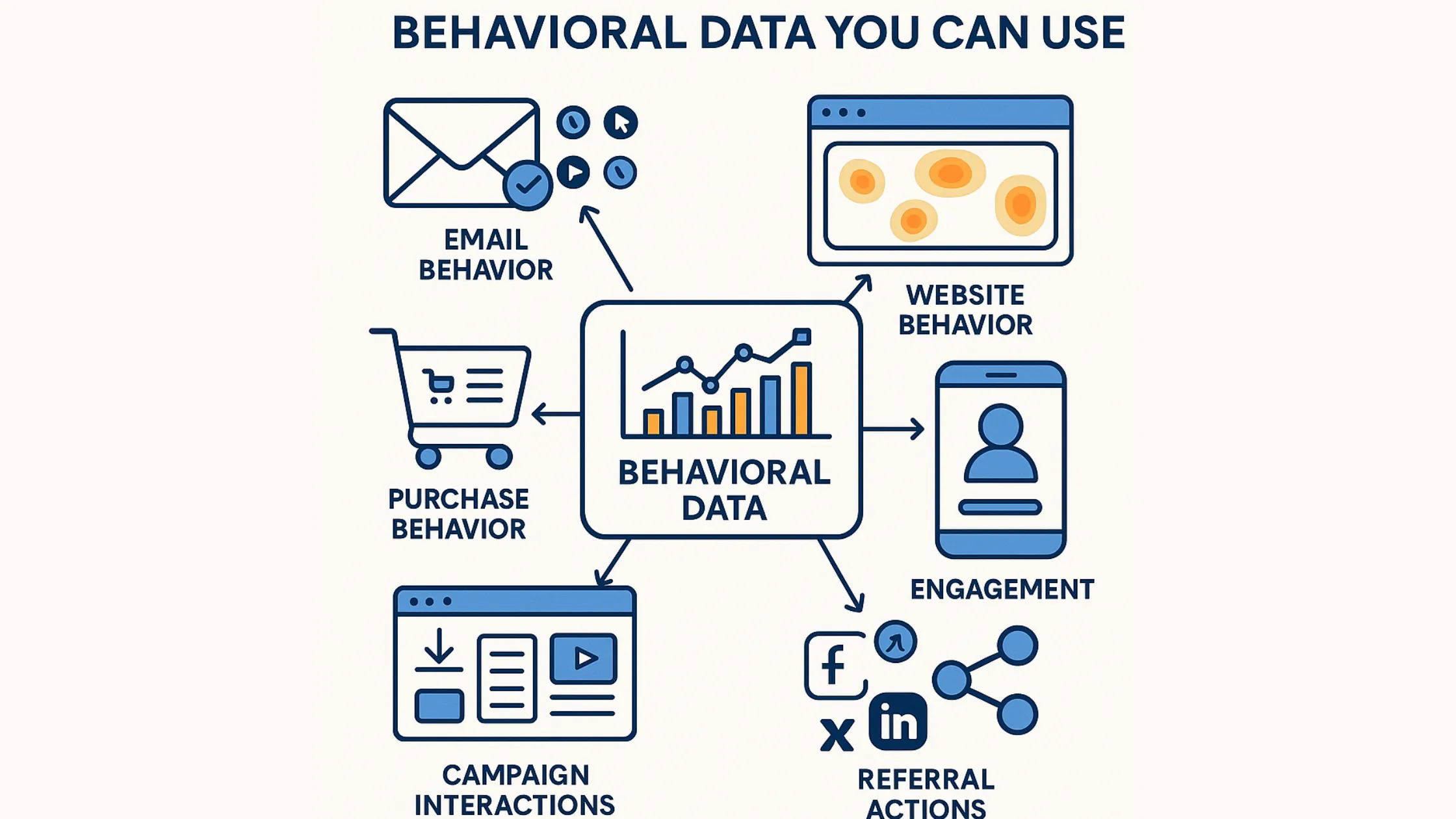
Platforms like Mailchimp, Google Analytics, and HubSpot allow you to collect and use behavioral data such as:
- Email behavior: opens, clicks, unsubscribes
- Website behavior: page views, time on site, button clicks
- Purchase behavior: past orders, cart activity, frequency
- Engagement: login frequency, app usage
- Campaign interactions: downloads, form fills, webinar attendance
- Referral actions: sharing, social engagement
This data feeds directly into email segmentation strategies, allowing you to send messages that resonate.
Why Behavioral Segmentation Matters

Most people do not like random emails. They want messages that match what they like or do. That is why behavioral segmentation is so useful. It helps you send the right email to the right person at the right time.
Here is what happens when you use it:
- 760 percent more money made from emails (source: Campaign Monitor)
- More people open your emails – open rate goes up by 14.31 percent
- More people click your links – clicks increase by 100.95 percent
- Fewer people unsubscribe – goes down by 9.37 percent
This means your emails work better, and your business grows faster. Instead of talking to everyone, you talk to people who care.
That is the smart way to do email marketing today.
From welcome drips to cart abandonment flows, behavioral workflows help marketers turn prospects into buyers, and buyers into loyal customers.
Top 5 Real-Use Behavioral Segmentation Workflows
Let’s explore the most effective email marketing workflows using behavioral triggers, platforms, and actual stats.
1. Abandoned Cart Recovery Series
Best for: E-commerce
Platforms: Google Analytics, Mailchimp, Sendinblue
Trigger: User adds items to cart but doesn’t complete checkout
Workflow Example:
- Email 1: Reminder with product image (1 hour after abandonment)
- Email 2: Offer a discount or free shipping (24 hours later)
- Email 3: Final reminder with social proof or urgency (48–72 hours later)
Performance Stats:
- 45% open rate
- 10% click-through
- Up to 15% cart recovery rate
(Source: Fluent CRM, Drip)
Keywords: email campaign, email blast, email marketing workflows, email blast service
2. Welcome Email Drip Campaign
Best for: SaaS, Creators, Bloggers, e-commerce
Platforms: Convert Kit, Mailchimp, Sendinblue
Trigger: Subscriber signs up to your email list or downloads a lead magnet
Workflow:
- Email 1: Welcome + what to expect
- Email 2: Introduce product/service or best content
- Email 3: Invite action—purchase, book, trial, etc.
Performance:
- 86% more engagement than standard newsletters
- Welcome series generates up to 320% more revenue
(Source: Smartlead.ai, Zapier)
Keywords: email newsletter service, mail marketing, email list for marketing
3. Re-engagement Campaign
Best for: All industries
Platforms: Mailchimp, Google Analytics, HubSpot
Trigger: User hasn’t opened your last 5–10 emails
Workflow:
- Email 1: “We miss you” with an incentive
- Email 2: Highlight recent updates, products, or events
- Email 3: Request feedback or offer opt-out
Stats:
- Up to 26% of dormant users re-engage
- Reduces spam score and email list decay
(Source: Zapier, Stripo.email)
Keywords: email segmentation strategies, email marketing segmentation, mailchimp competitors
4. Post-Purchase Nurture
Best for: Ecommerce, SaaS, B2C
Platforms: Sendinblue, ConvertKit, Mailchimp
Trigger: User completes a purchase
Workflow:
- Email 1: Order confirmation
- Email 2: Product usage tips
- Email 3: Request for review or UGC
- Email 4: Recommend complementary products
Stats:
-
60% more likely to get repeat purchases with nurture
(Source: Litmus, FluentCRM)
Keywords: email marketing campaign, email marketing platform, email marketing service
5. VIP Customer Upsell Campaign
Best for: High-AOV(Average order value), repeat customers
Platforms: Google Analytics, HubSpot, Mailchimp alternative tools
Trigger: Customer with 3+ purchases or high LTV
Workflow:
- Email 1: Exclusive offer or loyalty badge
- Email 2: Personalized product recommendations
- Email 3: Invite to referral program
Stats:
-
VIP segments yield 22% higher AOV and 2x lifetime value
(Source: Mailsend, Emarsys)
Keywords: best email marketing, email list service, email campaign services
Popular Tools for Behavioral Segmentation
Here’s how major tools compare when it comes to features and pricing:
| Platform | Free Plan | Best For | Key Feature |
|---|---|---|---|
| Mailchimp | Yes (up to 500 contacts) | Beginners & SMEs | Pre-built journeys, basic CRM |
| Google Analytics | Yes and paid also | All Business | In-depth website & user behavior tracking |
| ConvertKit | Yes (up to 1000 subs) | Bloggers & Creators | Clean UI, automation |
| HubSpot | Yes | B2B, Agencies | Advanced segmentation, CRM |
| Sendinblue | Yes (300 emails/day) | Small to mid-sized businesses | SMS + email automation combo |
Keywords: Mailchimp pricing,Google Analytics, ConvertKit pricing, free email marketing services
Behavioral Segmentation Use Cases by Industry
E-commerce
- Abandoned cart workflows
- Repeat buyer loyalty campaigns
- Product-specific browsing follow-ups
SaaS
- Free trial to paid upgrade drips
- Inactive user reminders
- Feature-based onboarding sequences
Education & Info Products
- Lesson progress triggers
- Certificate unlock email flows
- Behavioral quiz-based segmentation
Agencies & Service Businesses
- Lead magnet download drips
- Appointment follow-up automation
- Quote abandoned workflows
Pro Tips for Better Behavioral Segmentation in Email Marketing
1. Start Small and Scale Gradually
Begin with a simple behavior-based segment like “clicked email but didn’t convert.” This helps you understand basic triggers without overwhelming your system. Over time, expand to more advanced email segmentation strategies based on purchase history, cart abandonment, or browsing behavior.
2. Use Tags, Events, and Triggers Smartly
Most modern email marketing platforms like Mailchimp, HubSpot, and Google Analytics allow you to tag users based on their actions. For example, tag users who open emails but don’t click or those who revisit pricing pages. These tags become the foundation for smarter email marketing workflows.
3. Apply Conditional Logic for Precision
Behavioral segmentation shines when you apply conditional logic. For instance, “If user viewed a product category but didn’t add to cart, send a personalized product recommendation email.” Platforms like ConvertKit and Sendinblue support such logic easily.
4. A/B Test Everything You Can
From subject lines and call-to-action buttons to email send times and dynamic content-A/B testing is essential. It reveals what works best for your audience and improves your email campaign performance over time.
5. Avoid Over-Sending or Spamming
Too many behavior-based emails can feel intrusive. Keep the timing natural and the tone value-driven. Use frequency capping where possible. A well-timed email blast feels helpful-a flood of irrelevant emails feels spammy.
6. Analyze and Iterate Monthly
Use platform analytics to measure open rates, click-through rates, and conversion metrics. Platforms like Mailchimp and Google Analytics offer detailed reports. Use these insights to improve segmentation and your email campaign services.
7. Combine Behavioral with Demographic Segments
Behavioral segmentation becomes even more powerful when layered with data like location, gender, or device type. For example, send different email newsletters to users from metro cities vs. tier-2 towns based on purchase behaviors.
8. Use Email List Cleaning Services
Regularly clean your segmented lists using an email list service to remove inactive users. This keeps your deliverability high and ensures better results from your behavioral triggers.
9. Segment by Engagement Score
Assign a score to user actions like open, click, and purchase. Then, create high, medium, and low engagement segments. Tailor your email marketing campaign content accordingly.
10. Sync with SMS and WhatsApp Campaigns
Go beyond email-combine behavioral data with your WhatsApp or SMS marketing strategy. For example, if a user abandons a cart and ignores your email, follow up with a WhatsApp message.
Final Thoughts
In this Blog, we’ll delve into five meaningful real use-case email marketing workflows you can create based on behavioral segmentation data. We’ll explore the top segmentation platforms-Mailchimp, HubSpot, ConvertKit, Google Analytics, Sendinblue-and detail their features, pros and cons, and pricing. This will serve as a one-stop resource for anyone looking to boost their email effectiveness.
By incorporating these five real use email segmentation workflows brands will boost email open rates increase CTR improve conversion rates reduce customer churn and foster improved long-term relationships with customers. Whether you’re a small business owner an established digital marketing consultant or a growing ecommerce business, email behavioral segmentation is no longer optional-it’s a necessity for 2025 email marketing and beyond.
Therefore, if you’re still firing off generalized email marketing campaigns to your entire list, it’s time to pivot-as well as focus on proper email segmentation techniques for your list. Instead, rely on past purchase behavior, email engagement data, user activity, and site viewing history to help automate and personalize email marketing efforts for quantifiable success.
